
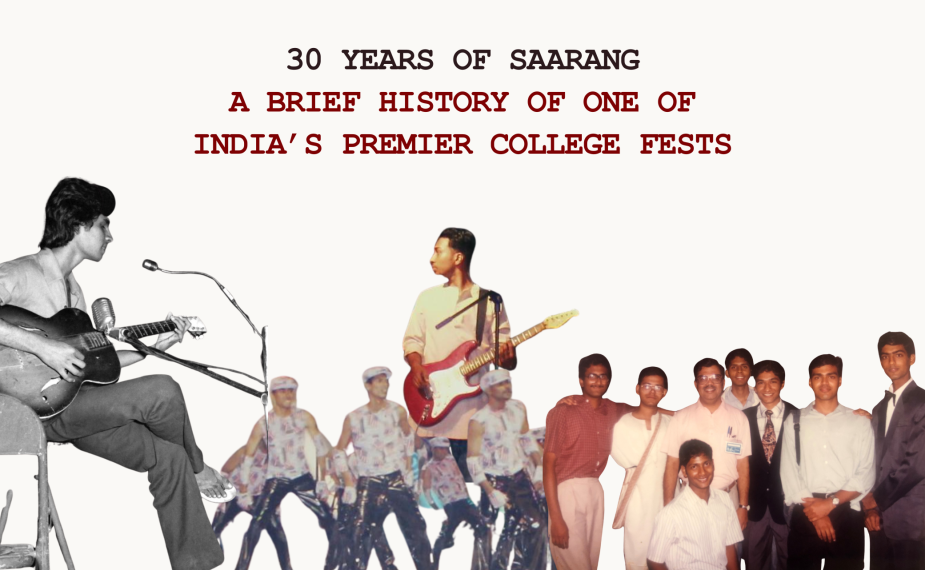
30 Years of Saarang
Courtesy: Glass Panels / Heritage Centre, IIT Madras.
Article by: Prof. Ajit Kumar Kolar, Retired faculty, and creative force behind Heritage Centre.
Cultural and sports programmes have been an integral part of the IIT Madras campus life since its establishment in 1959. In the earliest years, when students were housed in the Saidapet and Guindy hostels, small-scale events brought together the fledgling community. These programmes carried forward into the Krishna and Cauvery hostels once students began residing on the IIT Madras campus itself, and they quickly became an integral part of hostel life.
Such activities were not confined to the hostels alone. They found a prominent place in the Institute Day celebrations, which began in 1960, as well as in the Hostel Day functions that showcased the talents and creativity of students. Together, these occasions reflected the spirit of IIT Madras — a balance of academic pursuit with cultural expression and sporting enthusiasm. Over the decades, they have grown into defining features of campus life, shaping traditions that continue to thrive today.
In 1966, the Katyayini Sangeeta Sabha was established as a music club, though it eventually faded away. Around 1970, the IIT Madras Music Club came into being, with its primary mission centred on organizing and hosting programmes in Indian classical music. Cultural programmes by other groups on campus, including the Staff Club, various region-based associations like Kannada, Telugu, Tamil and Hindi, and KV and Central schools, contributed to the vibrant cultural ethos. Gradually, the inter-hostel cultural competitions were initiated. As early as 1964, the Inter-IIT sports competitions were held in the stadium inaugurated by the Nawab of Pataudi, the Indian cricket captain. So even by the mid 1960s, the cultural and sports scene on our campus was truly lively.
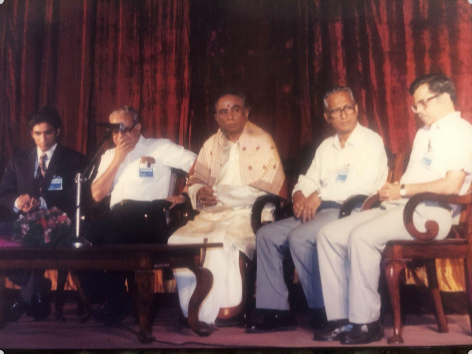
| The inauguration ceremony of Mardi Gras 1995 — the final time the festival bore this iconic name before becoming Saarang. |
The inter-hostel competitions gave impetus to the start of inter-collegiate cultural competitions at the Open Air Theatre (OAT), where the best talent from the city colleges participated. I was one of the Krishnites who, in the early 1970s, eagerly looked forward to these competitions and thoroughly enjoyed them—and learnt a lot! A few of the participants went on to make their names in the music field of the country. And then Mardi Gras happened! In 1974, the inter-collegiate competitions turned more inclusive and colourful with the naming of the cultural festival as MG, short for Mardi Gras. The student secretaries of the time were greatly impressed by the variety, novelty, and scale of the IIT Bombay festival, which had started in 1971 as Mood Indigo. An idea developed that IITM must graduate from a limited inter-collegiate festival, mostly confined to city colleges, to the level of a national student cultural festival. This resulted in MG 1974, which went on to become a truly national festival and soon arguably the most popular one, so much so that participating in it became a “status symbol” for college students.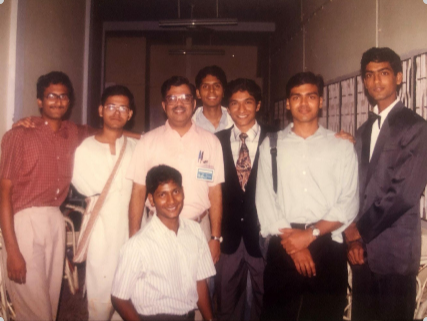
In the early 1990s, a feeling emerged among some on the IITM campus that, however popular and well-established MG was, the relevance of the name to the campus cultural ethos could be reconsidered. The type of cultural programmes in the festival, the participants, the location, and the timing of the festival during the Pongal season (mid-January) in a Madras City campus, lush with heritage vegetation and wildlife—part of the Raj Bhavan forest area—suggested that a name of more immediate relevance to the festival might be appropriate. When this idea was floated initially, there was a difference of opinion among the campusites, with quite a few vociferous arguments on both sides. Over time, most of the differences were ironed out, though some remained unconvinced about the change, and the Board of Students eventually passed the proposal to rename the festival.
Campusites were invited to suggest names for the festival, yielding about 300 entries in various languages. A student group, guided by Dean Prof. P. Srinivasa Rao of Mechanical Engineering, was tasked with finalizing the choice. After several rounds of elimination, six names emerged as favourites—one of them was Sarang.
While the final decision was hanging in the balance, some of us explored the meanings of these suggested names by consulting available dictionaries. Sarang embodies a multitude of meanings: sun, peacock, bee, snake, frog, butterfly, cloud, lake, a family of birds including lovebirds, lion, elephant, spotted deer, antelope, male deer with antlers, colourful, and a raga in Indian classical music. The word appears repeatedly in Kalidasa’s writings with general reference to nature. The student group appreciated these meanings, many of which resonated with aspects of the natural heritage of our campus. They were particularly impressed with three: “male deer with antlers,” which the IITM campus is known for; “elephants,” integral to our Gajendra Circle; and “sun,” as the festival was held during the period of astronomical significance marking the beginning of the sun’s northward journey.
The student group experimented with different spellings of the name to avoid distorted pronunciation, and finally agreed on SAARANG—seven letters with two As—symbolising the seven swaras (notes) unique to Indian classical music.
This name was officially communicated to all concerned and, since January 1996, has become synonymous with IITM culfest and continues to be popular with the student body on a national level. It has stood the test of time for 30 years, and it is hoped it will continue in the future also for many more years.
| A photograph taken in the green room behind the Open Air Theatre stage in 1995, after a Mardi Gras show. You can spot me standing, third from the left. |
Campusites were invited to suggest names for the festival, yielding about 300 entries in various languages. A student group, guided by Dean Prof. P. Srinivasa Rao of Mechanical Engineering, was tasked with finalizing the choice. After several rounds of elimination, six names emerged as favourites—one of them was Sarang.
While the final decision was hanging in the balance, some of us explored the meanings of these suggested names by consulting available dictionaries. Sarang embodies a multitude of meanings: sun, peacock, bee, snake, frog, butterfly, cloud, lake, a family of birds including lovebirds, lion, elephant, spotted deer, antelope, male deer with antlers, colourful, and a raga in Indian classical music. The word appears repeatedly in Kalidasa’s writings with general reference to nature. The student group appreciated these meanings, many of which resonated with aspects of the natural heritage of our campus. They were particularly impressed with three: “male deer with antlers,” which the IITM campus is known for; “elephants,” integral to our Gajendra Circle; and “sun,” as the festival was held during the period of astronomical significance marking the beginning of the sun’s northward journey.
The student group experimented with different spellings of the name to avoid distorted pronunciation, and finally agreed on SAARANG—seven letters with two As—symbolising the seven swaras (notes) unique to Indian classical music.
This name was officially communicated to all concerned and, since January 1996, has become synonymous with IITM culfest and continues to be popular with the student body on a national level. It has stood the test of time for 30 years, and it is hoped it will continue in the future also for many more years.